
A shoulder that slips out once can feel like a fluke. When it happens again during a swim, a volleyball game in Kendall, or even a simple reach overhead, it starts to shape how you move and play. Repeated dislocations often point to damage that does not heal well on its own. This guide explains why shoulders keep dislocating and how arthroscopic surgery may help restore stability.
Why One Dislocation Often Leads to Another
The shoulder is the most mobile joint in your body, and that range of motion comes at a cost. A dislocation happens when the ball at the top of your upper arm bone comes out of the shallow socket. Once a shoulder has dislocated, it is vulnerable to dislocating again.1 When the shoulder slips out of place repeatedly, the condition is called chronic shoulder instability.1
Research supports this concern for younger athletes. In one study of patients aged 15 to 35 after a first traumatic dislocation, more than half developed instability within two years, and younger men had the highest risk.2
What Happens Inside an Unstable Shoulder
A ring of cartilage called the labrum lines the edge of the socket and helps hold the ball in place. During a dislocation, the labrum and the ligaments attached to it can tear. A tear in a specific part of the labrum is commonly called a Bankart lesion.1
Most dislocations push the shoulder toward the front, but the shoulder can also dislocate backward, leading to a reverse, or posterior, Bankart lesion.1 With repeated dislocations, some bone loss may occur on the socket or on the ball.1 Our page on shoulder labrum tears describes these injuries in more detail.
Signs Your Shoulder May Be Unstable
- The shoulder dislocates more than once
- It gives out or slips during certain movements
- It feels loose, as if it is sliding in and out of the joint
- Pain follows activity or specific arm positions
Starting With Nonsurgical Care
Chronic shoulder instability is often first treated without surgery.1 Care may include rest, activity changes, medication for pain and swelling, and a physical therapy program that strengthens the muscles around the shoulder. It often takes several months of nonsurgical treatment before you can tell how well it is working.1
For some people, strengthening is enough to keep the shoulder stable for daily life and recreation. For others, especially those in contact or overhead sports, the shoulder may keep slipping despite a dedicated program.
How Shoulder Arthroscopy Restores Stability
Surgery is offered to patients with repeated dislocations to repair torn or stretched ligaments so they can better hold the joint in place, and Bankart lesions can be surgically repaired.1 Many of these repairs are performed arthroscopically.
During shoulder arthroscopy, a small camera and slim instruments are placed through small incisions. The torn labrum is reattached to the rim of the socket using small anchors that hold sutures. Our page on shoulder instability includes a video of a posterior Bankart repair using knotless soft anchors, which shows how this type of repair is performed.
Because the incisions are small, arthroscopy usually involves less pain and stiffness than open surgery, though full recovery still takes time.3
When Surgery May Be Considered After a First Dislocation
Some young athletes may choose surgery after a first dislocation, because of the high risk of the shoulder dislocating again.2,4 This decision depends on your age, your sport, the damage seen on imaging, and how much risk of recurrence you are willing to accept.
Recovery and Rehabilitation
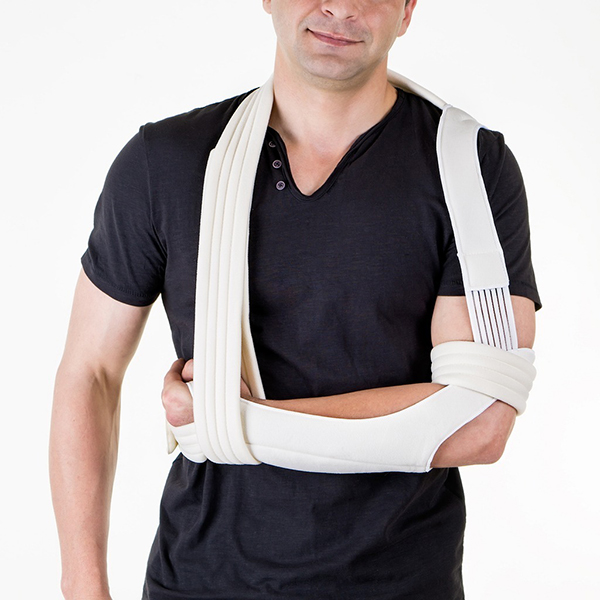
After a stabilization procedure, your shoulder is usually protected in a sling for a period of time, followed by physical therapy that gradually restores motion and then strength. It can take weeks to months for your shoulder to recover fully after arthroscopy.3 Our postoperative rehabilitation protocols include a plan for Bankart repair that guides each phase with your therapist.
Returning to contact or overhead sports usually comes last and depends on how well your shoulder regains strength and control.
Frequently Asked Questions
Can arthroscopic surgery stop your shoulder from dislocating again?
Arthroscopic repair aims to restore stability by reattaching the torn labrum and tightening the ligaments. It may reduce the chance of future dislocations, though results vary with your anatomy and activity.
Do you need surgery after your first shoulder dislocation?
Not always, since many people do well with physical therapy. Surgery may be discussed for young athletes at higher risk of recurrence or when imaging shows significant damage.
Where can you get treatment for shoulder instability in Coral Gables or Kendall?
You can be seen at our Coral Gables office or the Kendall Medical Pavilion, both convenient for athletes throughout Miami who are dealing with a shoulder that keeps slipping out.
What is a Bankart repair?
A Bankart repair is surgery that reattaches the torn labrum to the edge of the shoulder socket. It is often performed arthroscopically through small incisions.
How long does recovery take after shoulder stabilization surgery?
Recovery usually takes several months and moves from protection to motion to strengthening. Your return to sports depends on how your shoulder progresses.
Regaining Confidence in Your Shoulder
A shoulder you can trust lets you play, lift, and reach without hesitation. If your shoulder keeps slipping out, you can request an appointment at our Coral Gables or Kendall office in Miami to discuss whether stabilization may be right for you.
References
- Chronic Shoulder Instability. OrthoInfo, American Academy of Orthopaedic Surgeons.
- Robinson CM, Howes J, Murdoch H, Will E, Graham C. Functional outcome and risk of recurrent instability after primary traumatic anterior shoulder dislocation in young patients.
- Shoulder Arthroscopy. OrthoInfo, American Academy of Orthopaedic Surgeons.
- Dislocated Shoulder. OrthoInfo, American Academy of Orthopaedic Surgeons.
About Dr. Herrera: Mauricio Herrera, MD is a board-certified orthopedic surgeon with 25+ years of experience, specializing in sports medicine and minimally invasive arthroscopic surgery. He treats shoulder injuries, ACL tears, and joint conditions using advanced techniques designed for faster recovery. Dr. Herrera is known for a patient-centered approach that helps individuals regain mobility and return to active lifestyles safely and efficiently.


